
“Two Tragic Murders in Herat: Women Left Defenseless Against Domestic Violence”
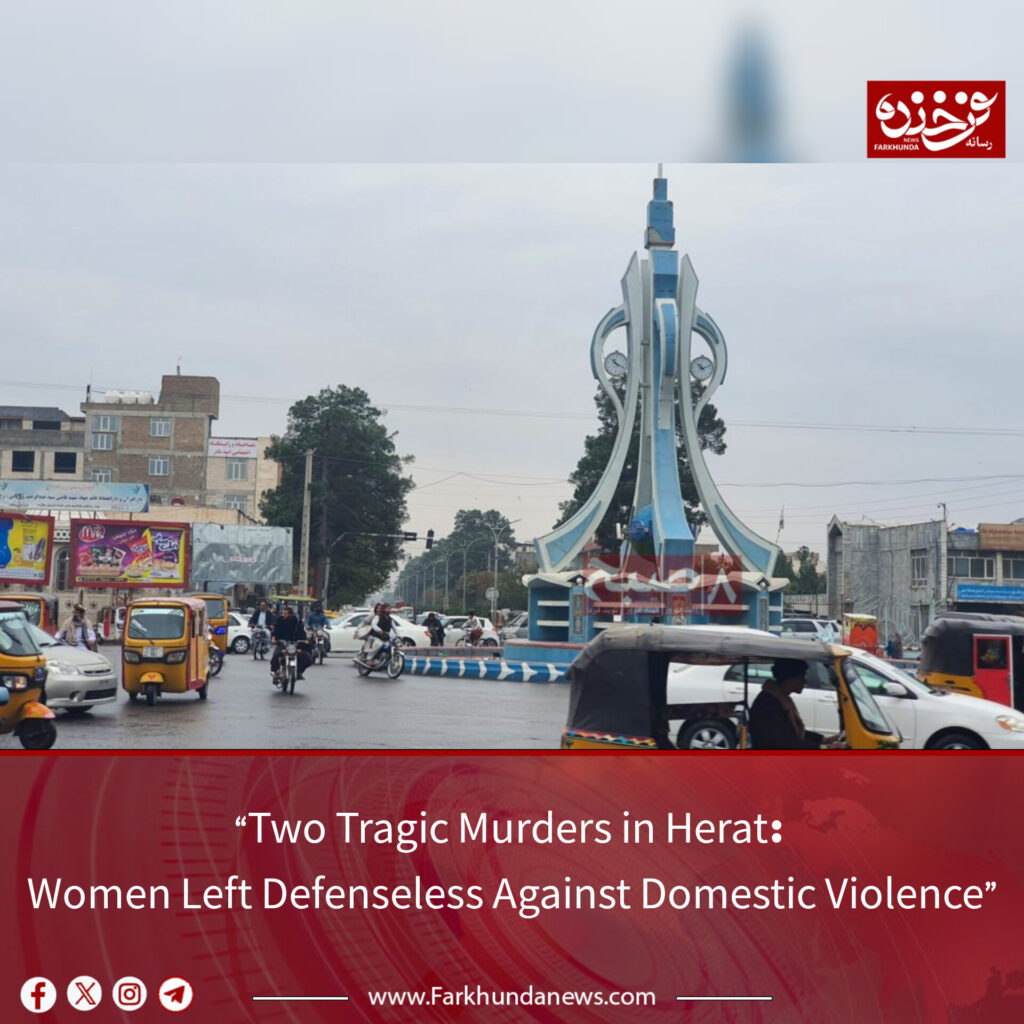
Farkhunda News; Herat, Afghanistan: Under the shadow of Taliban rule and intensifying restrictions on women, another horrific act of domestic violence has shaken the country. Local sources in Herat report that a man brutally beheaded his wife last night in Adraskan district, before stabbing and killing both of his parents. The tragedy unfolded in the village of Gol-e-Tut. While the motive behind the attack remains unclear, many women’s rights advocates see it as a direct outcome of the Taliban’s repressive environment. In this environment, women are denied protection, stripped of rights, and systematically silenced. Herat’s Taliban-controlled police command confirmed the incident but has not released any information on the investigation or underlying cause. This marks the second woman killed by her husband in Herat within just 24 hours. On the previous day, another young woman was murdered by her spouse in the heart of the city. Since the Taliban’s return to power, violence against women has surged across the country. The removal of women from education, employment, and public life, combined with the absence of judicial independence and support institutions, has left Afghan women in an increasingly perilous state. According to women’s rights activists, the cases that reach the media are just the tip of the iceberg. Hundreds more suffer in silence, hidden behind closed doors, with no access to justice or even a voice. At a time when Afghan women are facing historic levels of oppression, these tragedies are not isolated incidents. They are symptoms of a systemic crisis, one that thrives on silence, impunity, and the erasure of half the population.
The dreams that remained, “A narrative of the lives of Afghan girls”
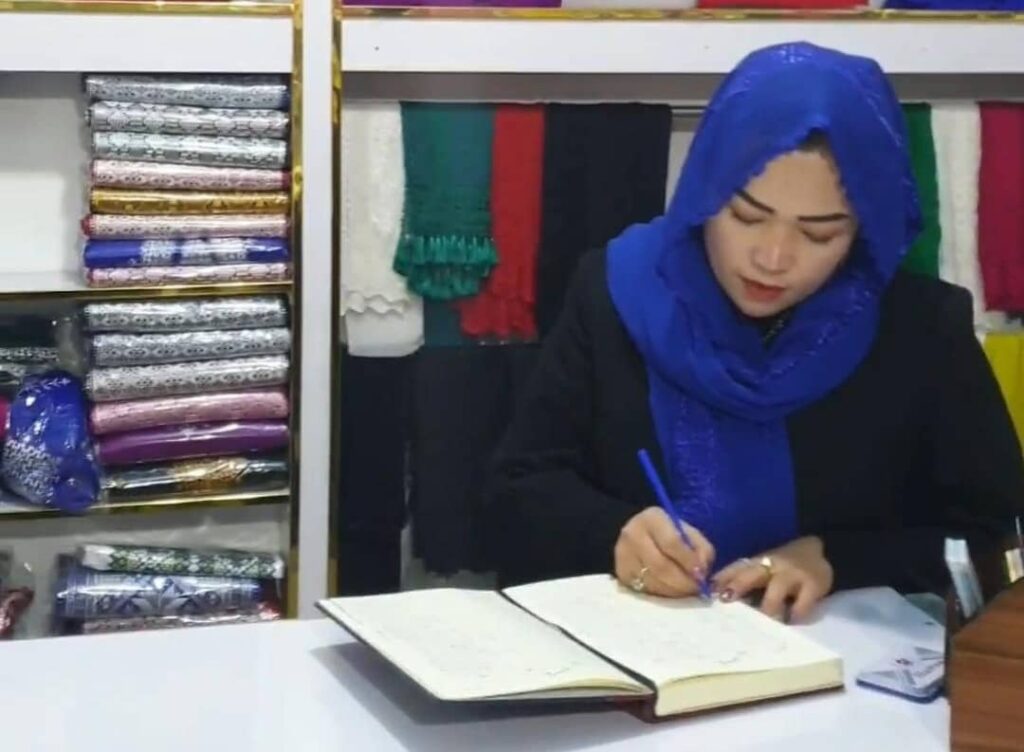
Fatima daughter, who was deprived of her long dreams due to the circumstances and is now a shopkeeper, says: “Taliban’s strict laws have caused not only emotional and psychological trauma but also economic trauma in my life.” Farkhunda Media: she is 23 years old and lives in a family of nine people in one of the districts of Kabul city. she is the sole breadwinner of her family. she struggles with many problems in order to save herself and her family from the chaotic economic situation. Fatima, who was in the sixth semester of international relations at Ibn Sina University, says: “When the Taliban took over Kabul, they deprived us of education and did not allow me to achieve the dreams and aspirations that I fought for several years, and I completely became a One of the victims of ignorance. According to her: After she was banned from continuing her studies, she was going through a very unfortunate situation and day by day the situation became more difficult and life became more difficult for her. Fatima continues: “My father is old and does not have the ability to work. On the one hand, the lack of destiny and the limitations of the Taliban, and on the other hand, the economic problems, were eating me up day by day, and I had no choice but to be patient. I was in a state of despair for almost two years and thought myself an extra being And I would sit for hours and think to myself and say that if I were a boy, maybe I wouldn’t have encountered this day.” When she realizes that she will no longer be able to achieve the dreams and aspirations that she has been fighting to achieve for several years, she follows another way to at least have one source of income and thus end her economic problems. But she knew that whatever path she chooses in the current situation will lead to difficulties. she, who had established a handicraft store a year ago, now has 300 housewives, student girls and school teachers directly and indirectly working with him. Fatima, who created this shop for her and her generation’s financial independence, said: “This job I chose has its own difficulties. Every day I start with the fear that Talib will say something or arrest me, but I have no choice, and if I don’t work, where will I pay for the household expenses?” She manages this shop while the restrictions on women’s work and life have reached their peak, but she does not submit to such patriarchal rules and fights for her future and her generations. According to her, most of their productions are Hazargi clothes, hand embroidery, chadors and shoes which are sewn by these 300 women. Complaining about the decrease in her sales, she said: “Before, our sales were good. People used to come and buy, but after the process of rounding up the girls started, our sales decreased, because most of the families did not leave the house for fear of being arrested. Gathering the girls was not only a mental blow for me, but also an economic blow for me. According to Fatima, while the conditions are becoming more difficult for women day by day, the busyness of women and girls who pay for their studies through hand embroidery is her only comfort in these days when despair and fear scream from every corner of this city. A situation has prevailed in Afghanistan where women are not even able to plan their personal life path due to the pressure of restrictions, but these restrictions did not prevent Fatima from achieving her wish and now she is trying harder than before to achieve her goals. she did not feel disappointed by the restrictions imposed by the Taliban and plans to attract more women to work and expand his production. Fatima, who emphasizes on individual financial independence, says: “Financial independence is more important in life, so we must try to expand individual financial independence, and every person can achieve financial self-sufficiency in order to lead their self to financial independence through society.” At the end of her speech, she asked other girls who were unable to continue working and studying: “The imposed restrictions aren’t the reason why we can’t stay at home and be sad, let’s make a way for ourselves. My expectation and wish is that every girl is a Find another way for yourself and don’t stop fighting and hopefully bravely walk on the path of life and there is always a way and you should not be disappointed. This is despite the fact that it has been more than two years that Afghan girls have been Prohibited from working and studying and the Taliban has imposed strict restrictions on them, and the recent restrictions of the Taliban on women have also followed caused serious domestic and foreign reactions. Atefa Suhrabi
Bitter farewell: I will leave my sister’s dismembered body here and leave
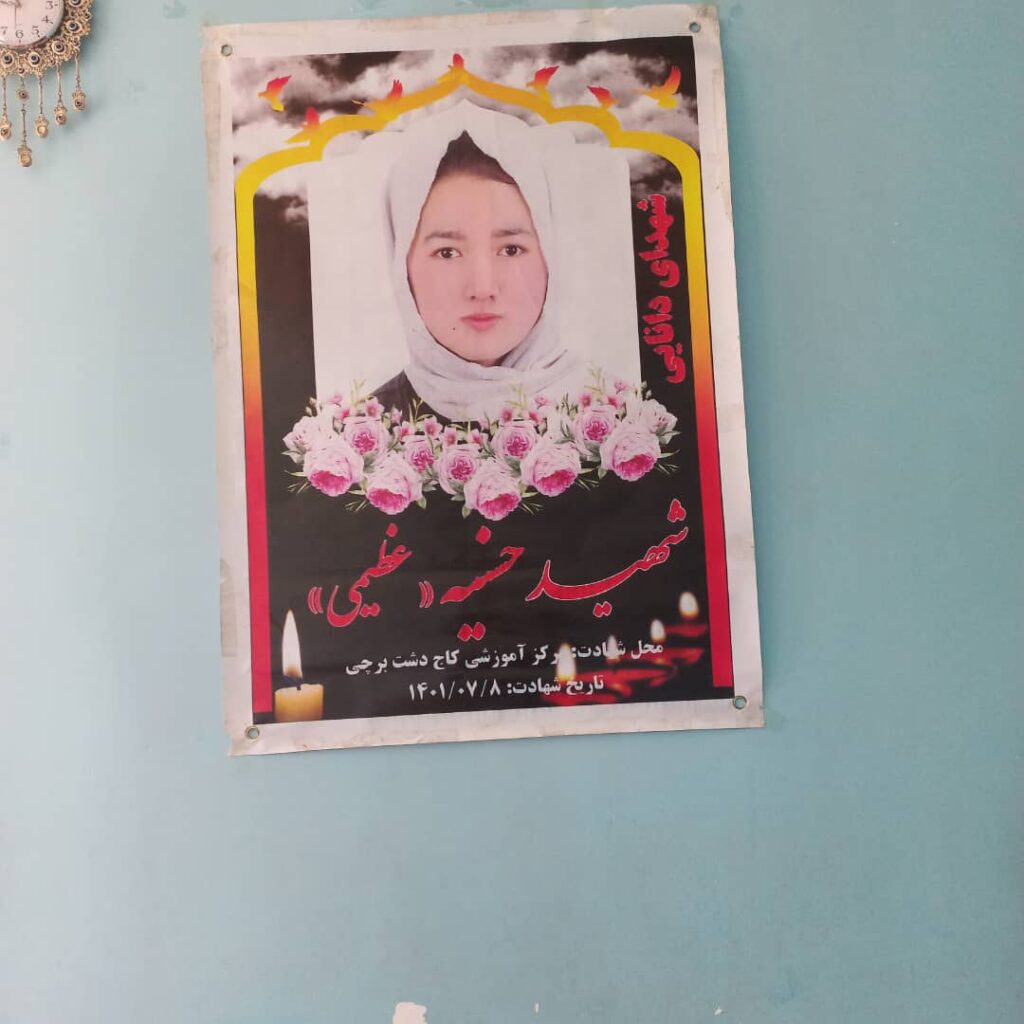
Husnia is one of the victims of Kaj course The world’s protests and concern about the genocide of the Hazaras have been boosted while this generation has been systematically removed from the society of Afghanistan, and Hazara youths and teenagers have been repeatedly attacked by terrorists in schools, educational centers, mosques, civil protests, and buses. Deadly explosions in Hazare Jat areas killed hundreds of people and destroyed dozens of families. Farkhandeh Media: Narrative of one of the victims of this incident (I will leave my sister’s dismembered body here and go) “Husnia always went on foot due to economic problems, but on Friday, because it was too late, I told her to go by car. On the same day, his departure happened and not his arrival. Husnia was a quiet girl, she was very close to me during my childhood, she used to write me letters and Secret Heart . Zainab Azimi, the sister of Husnia Azimi, one of the students who was the victim of the explosion at the Kaj course in Dasht Barchi, Kabul. she recounts the loss of her sister and how Hazara schoolgirls in Afghanistan were slaughtered for their studies in the land of emigration. “On the day of the explosion, it was Friday. We had gone to my older sister’s house together with Husnia on Friday night On that day, Husnia woke up a little late, their exam was about to start at 6:15, but Husnia had just woken up at 6:15. I told her not to go today, it is too late and she can’t arrive to exam But she told me no, I have to go, I will go and I will attempt to arrive the course by half past six. I didn’t say anything to her, I just said go in the car today, she said okay. Because of the economic problem we had, Husnia always went on foot to save her expenses. I had breakfast with my older sister and slowly I went home. On the way back home I said that I will pay for the electricity as well. I entered the shop where the shopkeeper was talking to the customer that there was an explosion at the Barchi I was worried and asked where the explosion happened, they said in Kaj course, I said loudly that my sister was studying there I called Husnia’s number, but she did not answer I ran to course, but there was no one, all the dead and wounded had been taken out of course, and the building had turned into ruins. We went to several hospitals because of Husnia, but the Taliban very coldly and smilingly did not allow us to go inside the hospitals and search for Husnia. My uncle and I went to the forensic medicine together, she wasn’t there, we went to Esteghlal hospital, we wanted to go to Amirjansi hospital, we were on our way when my older sister called me and said to come, Husnia Jan has been martyred and she is in Mohammad Ali Jinnah hospital. We came to the hospital and accepted the body. Husnia was 19, her spring had just begun, everyone loved her Husnia always tried to save her money and not bother my parents too much. “Husnia was inside the big plastic, when I opened it, it was Husnia, as if she was in a deep sleep. My uncle, his wife and other ladies gathered to bathe Husnia When we were washing Husnia’s lifeless body in the mosque I saw that she was hit by explosives on her left side. Her neck had a deep wound as if someone had hit her with an ax Her arm was broken and a piece of chair was stuck in her armpit We pulled all the small pieces of wood from her body. The explosives that hit her behind her head had cut off her flesh and her hair was completely burnt.” “We bathed her, shrouded her and took her to Jaghori to my parents to be buried. Husnia had come to us (her sisters) from Jaghori for a short time, she was the last and youngest girl in the house. When she learned through the news on TV that girls are also allowed to take the entrance exam, she decided to go to the course and prepare for the exam. she went to the course every day, after several days, she passed the test on Friday, got a good grade and told me that I passed with 261 marks in literature field. she was very happy, I told her it was great, even though you said I was not ready, but you still got a good result, good luck. This was the second preparatory exam that Husnia wanted to participate she told me that I will take this exam so that it will be classified and I will adjust my choices. she left but never came back” Zainab, Husnia’s sister, worked in one of the government departments, but she lost her job after the fall of the regime. Zainab’s husband was in the Afghan security forces, and in the recent wars between the security forces and the Taliban, it was unclear whether he was alive or killed. There is no news, Zainab with her seven-year-old daughter is now in the country of immigration “Pakistan” looking for a better life in a safe place. she says; I don’t know if I can forget everything by leaving the place where the most bitter thing happened to me or not? Soheila Gulistani
A black night of history for “one life” in Taliban prison
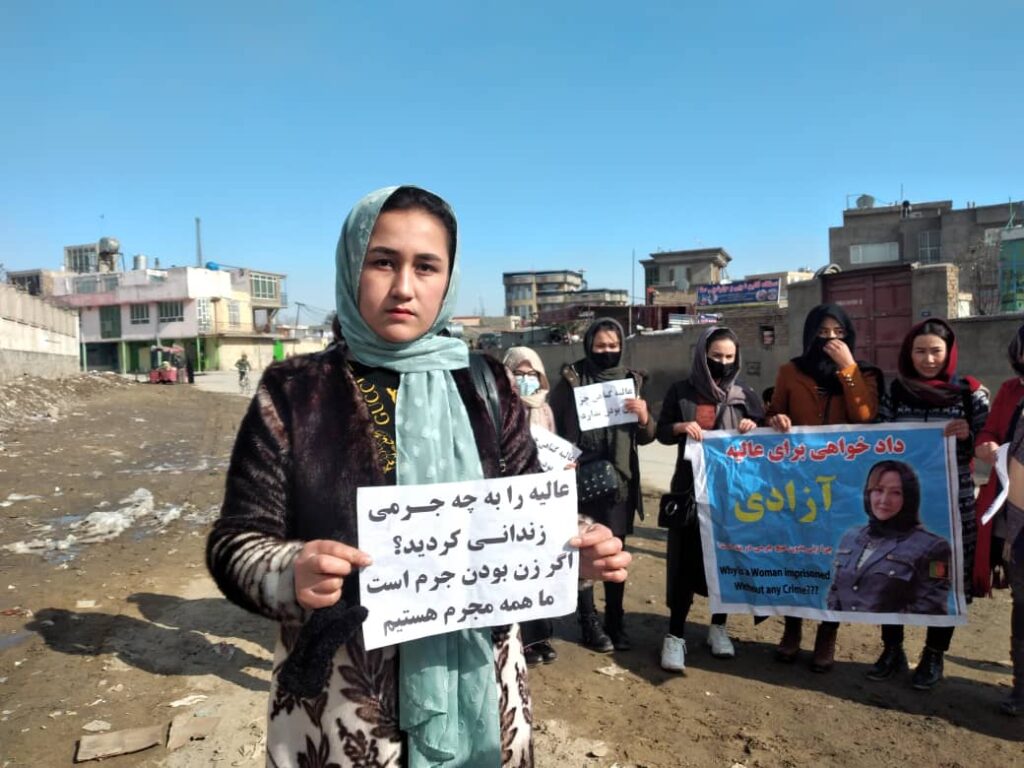
A bitter account of the story of the imprisonment of a young Afghan girl, who spent two days in a Taliban prison for the crime of seeking justice. Hakima Mahdavi is one of the members of the “Women’s Justice Movement” she was arrested from Tabsem cafe by help a person close to the Taliban, that sit to the cafe as spy, That person had found out by using a mobile phone that Hakima Mahdavi is a member of the movement for justice. Hakima narrates the story of her imprisonment as follows: “I made a date with my friend Sahar (pseudonym) at Tabsem Cafe, we were supposed to talk about a pre-planned program, we were talking, laughing and telling stories together. Unaware that a few minutes later they will take this smile from us forever. A few minutes had not passed when the door of the cafe was closed with a terrible sound and the whole place was occupied by people affiliated with the Taliban. color of my face flied, my hands were shaking and I was out of breath. As if there was no escape from this nightmare. I looked around, the men were standing in one corner and the women in the other. All those rascals who live under the name of man were whipped in turn for the crime of prostitution and adultery and stood in the other corner. I thought for a moment. If we all raise our voice against this oppression, we will never experience this humiliation, but what is unfortunate and tragic is that in this path of injustice, oppression, and betrayal, women are the only ones who raise their voices and demand justice. When it was my turn. He took my phone and told my mother with a short call that we will take your daughter to police station for prostitution and the call was disconnected. I wish no one would experience Taliban prison, a year passed for me in one night. they was treated me like an animal and gave me rotten food that I could not eat or drink. The Taliban beat my face and head, and gave electric shocks to parts of my body that I could not show to the media. they asked me many times, who do you work with? Who do you get money from? And why are you protesting? I was just telling the truth: “We are raising our voices for the defense of women’s rights, and we do not take money from anyone, and no one supports us.” But they repeated this question every time with successive blows. In exchange for my release, the Taliban demanded 10 lakh Afghanis from my family. When I heard this, I wished for death. Because I knew that no one would support us except my two brothers and my old mother. I wish I would die and not experience these hard days of my life and destruction. The next day, my brother was released me with 800,000 Afghanis, and because he hadn’t another 200,000, he was imprisoned for two months. This is not the end of the story! From that day on, the family looked down on me and our relatives did not allow me into their house, they were afraid that the Taliban would cause problems for them when they saw me. I spent the days in my friends’ rooms and houses. After all these hardships, my family and I immigrated to Iran. Currently, I am busy with the hard work of “tailoring” to pay the borrowed money that they paid in exchange for my release. I ask the international community to please help the women of Afghanistan. Especially the suffering and grieving women of the Hazara, whose fate is sadness, oppression and betrayal. We are also human beings, we have the right to live, we have the right to be present in the society as a human being. If the Taliban reads this story of mine, they should know that I will never surrender to their oppression, wherever I am in the world, I will raise my voice and support the rights of Afghan women and girls. This is despite the fact that protesting and imprisoned women have repeatedly reported the oppression and torture of the Taliban in prison. These narratives show the life of women in prison. History should know that brave Afghan women spent days and months in the harsh and painful prisons of the Taliban for the crime of seeking justice. kobra Alizada
The hard and breathtaking life of former military families in Afghanistan
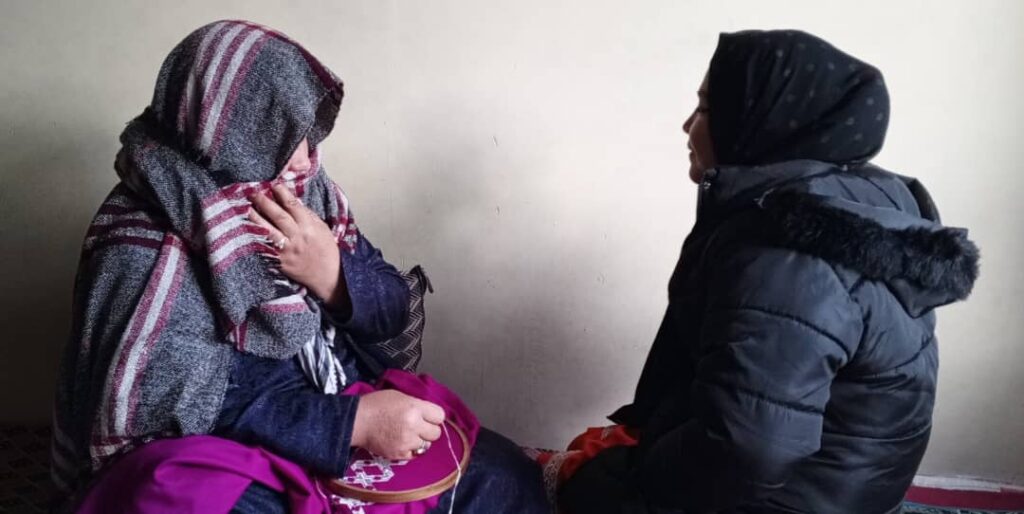
Called that the story of the threatened families needs months of research. The Taliban is like a dark black cloud that by descending, not only blackened life but also stole the sweet taste of life from a deprived section of the society, the most victim of which is women. Farkhandeh Media: After the re-establishment of the Taliban government, the families of former soldiers in Afghanistan are living in the most difficult conditions. “So that the Taliban would not imprison us, I burned all of my Husband memorabilia, from his military uniform to his photos.” Arifa (pseudonym), a thirty-six-year-old woman from Bamyan province, said in a conversation with Farkhandeh media that she lost her husband in the war with the Taliban during the previous government. she lives with her five orphaned children. While tears were falling from her cheeks like hailstones, she was telling a story about her husband, what pains she did not endure and what problems she did not deal with after his departure. She turned out to be a difficult woman, the story of her life is no less than that of other widows. She stayed to be a father and mother to her five children. Arifa says: “I was fifteen years old when I got married. My husband’s family was a big family, we had a good life together until my husband came to Kabul for better education of my children. Most of the time he was on duty in Kabul, but sometimes he went to the provinces due to military wars. They brought my son and daughters from school because your great-grandmother died. My heart was trembling and it was testifying that something bad had happened. When I saw the lifeless body of my husband in the Charsedbester hospital, my eyes became dark and I fainted. He was shot in his side, his eyes were bruised, the miseries and hardships of our life started after that day. My children were smaller, they could not work. During the day, I worked at the cucumber farm and at night I used to embroider. Our expenses were paid by a charity organization as much as we needed or less than that . After my husband was killed, I didn’t see happiness, I couldn’t go anywhere, I couldn’t wear new clothes, my heart was full of hatred, but there was no one to share my pain with, if my children were happy, I was happy too, and if they were sad, I was sad too. the days passed like this until the Taliban came and I burned all the memories of my husband to save the lives of my children. After his death, I lived with his memories, I kept his photos, clothes, and belongings, and I grieved pain with themes. I even dreamed that my husband said to burn my clothes. Golbakht (pseudonym) is Arifa’s daughter, sitting quietly and listening to her mother’s words. I understood from her tearful eyes that he must have endured the pains. I asked about her wishes. She said “Education was my father’s wish, I will never allow my father to not achieve this wish, I will raise my voice in the way of science and learning as long as I live, I will learn and teach. In the continuation of her stories, she said: I have gone through many disasters: the explosion in the Kag, the restrictions of the Taliban and dozens of other problems are examples of the pains that have made me grow more. Giving up is not in my nature, I live to learn. she asked the United Nations and those who are at the top of politics to ask the Taliban to open the doors of schools and universities for girls. This is despite the fact that after coming to power, the Taliban killed hundreds of soldiers of the former government in different ways and tortured and harassed the families of the former soldiers. Shakila Gulistani
Analytical Approach to the Internal Situation in Afghanistan

Understanding the internal situation in Afghanistan requires a multifaceted analytical approach that considers historical context, socio-cultural dynamics, political developments, security challenges, economic conditions, and the aspirations of its diverse population. This analytical framework seeks to provide a comprehensive view of Afghanistan’s internal dynamics. 1. Historical Context: Analyzing the historical context is essential to grasp Afghanistan’s internal dynamics. This includes an examination of past governments, periods of stability, conflicts, and foreign interventions. Historical legacies continue to influence contemporary events. 2. Socio-Cultural Dynamics: Understanding Afghanistan’s diverse ethnic and tribal composition, as well as its social norms and values, is crucial. Analyzing how these factors shape the roles and expectations of individuals and groups within society helps elucidate internal dynamics. 3. Political Landscape: Examining the political landscape involves assessing the power structures, governance models, and key actors in Afghanistan. This includes understanding the role of political parties, factions, and the extent of political inclusivity or exclusion. 4. Security Challenges: Assessing the security situation is fundamental to understanding internal dynamics. This involves analyzing the activities of insurgent groups, the state’s capacity to maintain security, and the impact of external actors on security. 5. Economic Conditions: Economic factors, including poverty levels, employment opportunities, access to basic services, and income disparities, play a significant role in shaping internal dynamics. Evaluating the economic challenges faced by Afghans helps explain their motivations and grievances. 6. Local and Regional Dynamics: Internal dynamics are often influenced by regional and local factors. Analyzing the relationships between Afghanistan and neighboring countries, as well as the role of regional powers, is critical to understanding the broader context. 7. Civil Society and Public Opinion: The role of civil society organizations, the media, and public opinion in shaping internal dynamics should not be overlooked. Their activities, advocacy, and influence on government policies are key elements of the internal landscape. 8. Aspirations and Identity: Understanding the aspirations and identity of Afghans, including their desire for peace, justice, human rights, and self-determination, is crucial. Analyzing how these factors interact with broader socio-political dynamics helps to anticipate future trends. 9. Vulnerable Populations: Assessing the vulnerabilities of specific groups, such as women, children, minorities, and internally displaced persons, is essential. These populations often face unique challenges that impact the internal situation. 10. Environmental Factors: Environmental issues, such as water scarcity and climate change, can exacerbate internal challenges, including resource conflicts and displacement. Examining the environmental dimension is increasingly important. 11. Conflict Resolution and Peacebuilding: Analyzing ongoing efforts for conflict resolution and peacebuilding is vital for understanding the trajectory of internal dynamics. This includes examining negotiations, reconciliation processes, and the role of international mediators. 12. Future Scenarios: Finally, an analytical approach should consider potential future scenarios based on current trends, external influences, and internal dynamics. Scenario planning can help anticipate challenges and opportunities. In conclusion, comprehending the internal situation in Afghanistan requires a holistic analytical approach that considers a multitude of factors and their interactions. This multifaceted perspective is crucial for policymakers, researchers, and practitioners seeking to engage with Afghanistan and contribute to its stability, development, and peace.
The Taliban: A Complex Portrait

Introduction: The Taliban, a militant group originating in Afghanistan, has garnered global attention for decades due to its complex history, actions, and impact on the region. This report offers an overview of the Taliban, tracing its origins, evolution, objectives, and the challenges it presents to both Afghanistan and the international community. I. Historical Background: The Taliban emerged in the early 1990s in the aftermath of the Afghan Civil War and the Soviet withdrawal. They sought to establish a strict interpretation of Islamic law and brought a semblance of stability to a war-torn country. II. Rule in Afghanistan (1996-2001): The Taliban captured Kabul in 1996 and controlled most of Afghanistan. During their rule, they enforced a harsh interpretation of Sharia law, which severely curtailed women’s rights, led to the destruction of cultural heritage, and harbored international terrorists, notably Osama bin Laden. III. U.S. Intervention and Taliban Resurgence: Following the 9/11 attacks, the U.S.-led coalition toppled the Taliban regime in 2001. However, the Taliban persisted as an insurgent force, launching a protracted insurgency. IV. Evolution and Objectives: Shifting Ideology: The Taliban has evolved in its approach, expressing some willingness to negotiate and share power. Objectives: The group’s primary objectives include the reestablishment of an Islamic Emirate, withdrawal of foreign troops, and the implementation of their version of Islamic law. V. The Doha Agreement and the Return to Power (2021): In August 2021, the Taliban captured Kabul, marking a significant shift in Afghanistan’s political landscape. This takeover came after the U.S.-Taliban Doha Agreement, which committed the U.S. to withdraw troops. VI. Challenges and Concerns: Human Rights: The Taliban’s track record on human rights, particularly women’s rights and freedom of expression, raises significant concerns. International Relations: The Taliban’s return has sparked debates over international recognition, diplomacy, and engagement. Security Threats: Afghanistan’s instability and potential for harboring extremist groups pose security risks globally. VII. Current Situation: The Taliban has established an interim government and faces challenges in governance, humanitarian crises, and economic instability. VIII. International Response: The international community is navigating a complex landscape in its engagement with the Taliban, focusing on humanitarian aid, conditional recognition, and counterterrorism efforts. Conclusion: The Taliban’s history and resurgence have far-reaching implications for Afghanistan and the world. Its capacity for change and willingness to uphold human rights and engage with the international community will shape its future trajectory. Balancing security concerns with humanitarian needs remains a pressing challenge, and continued global attention is essential to navigating this complex terrain and addressing the evolving dynamics surrounding the Taliban.
Women’s Migration After the Taliban: The Journey to New Beginnings

Introduction: In the wake of the Taliban’s return to power in Afghanistan, the world’s attention remains focused on the nation’s evolving dynamics. One aspect that deserves particular attention is the plight of Afghan women who have embarked on journeys of migration, seeking safety, freedom, and opportunities beyond their homeland. This post sheds light on the challenges they face and the resilience they exhibit as they navigate this uncertain path. A Search for Safety: The return of the Taliban has raised concerns about the safety and rights of Afghan women. Many fear a return to the restrictions and oppression of the past. Consequently, a significant number of Afghan women have made the difficult decision to leave their homes in search of safer havens. Challenges on the Journey: The journey of migration is fraught with challenges: Perilous Routes: Afghan women often must traverse dangerous routes, encountering harsh conditions and uncertainty. Family Separation: Many women leave behind families, often with the hope of reuniting in safer countries. Legal Hurdles: Navigating immigration and asylum processes can be complex and fraught with uncertainty. Cultural Adjustments: Adapting to new cultures and societies presents its own set of challenges. Resilience and Hope: Despite the obstacles, Afghan women demonstrate remarkable resilience and hope: Education Pursuit: Many aspire to continue their education and seek opportunities for personal growth. Economic Independence: They are determined to secure jobs and financial independence, allowing them to support themselves and their families. Advocacy: Afghan women in diaspora communities are raising their voices, advocating for the rights and protection of those left behind. Global Support: International organizations, governments, and communities around the world are extending support to Afghan women migrants: Humanitarian Aid: Donations are helping meet immediate needs for shelter, food, and healthcare. Legal Assistance: Legal aid organizations are assisting with immigration and asylum processes. Education and Integration: Efforts are underway to facilitate education and integration into new societies. Conclusion: The migration of Afghan women after the Taliban’s resurgence highlights their unwavering determination for a brighter future. As they embark on these journeys, they carry with them not just their personal aspirations but also the hopes of Afghan women still in Afghanistan. The global community’s solidarity and support are crucial in ensuring their safety, rights, and opportunities as they seek refuge and new beginnings. The stories of Afghan women migrants serve as a powerful reminder of the resilience of the human spirit and the importance of safeguarding the rights and dignity of all people, regardless of their place of origin.
Empowering Afghan Women through Sports: Breaking Barriers and Shattering Stereotypes

Introduction: Afghanistan’s sporting landscape is undergoing a remarkable transformation as women break free from societal constraints to pursue their athletic passions. In a country known for its tumultuous history, the rise of women in sports represents a beacon of hope and empowerment. This post celebrates the resilience and determination of Afghan women who are rewriting the script through sports. Breaking Cultural Barriers: Sport has long been considered a male-dominated domain in Afghanistan, but Afghan women are defying cultural norms and expectations. From cricket to taekwondo, female athletes are emerging as trailblazers and inspiring the next generation. Trailblazing Athletes: Kamila Sidiqi: The story of Kamila Sidiqi, a former women’s national football team player, became the subject of a best-selling book and movie. Her journey from footballer to businesswoman reflects the indomitable spirit of Afghan women. The Afghan Women’s National Cricket Team: This team, despite numerous challenges, has persevered to become an international sensation. Their dedication and success have showcased Afghan women’s potential on a global stage. Challenges and Triumphs: Afghan women face numerous challenges in their pursuit of sports, including societal pressure, security concerns, and limited facilities. However, their determination shines through: Access to Facilities: Many women’s sports teams still lack proper training facilities and equipment, but this hasn’t deterred their commitment to the sport. Gender Stereotypes: Afghan women are challenging stereotypes about what they can achieve. They’re proving that athleticism knows no gender. The Impact Beyond Sports: The benefits of women’s participation in sports extend far beyond the field: Empowerment: Through sports, Afghan women are gaining confidence, leadership skills, and a sense of self-worth. Health and Well-being: Regular physical activity promotes better health and overall well-being, which is especially crucial in a challenging environment. Supporting Afghan Women in Sports: Infrastructure: Investment in sports facilities and infrastructure is vital to ensure women have access to proper training spaces. Awareness and Encouragement: Raising awareness about the achievements of Afghan female athletes and providing encouragement can help break down stereotypes. International Collaboration: Collaborating with international organizations and neighboring countries can provide opportunities for Afghan women to compete on a global stage. Conclusion: The journey of Afghan women in sports is a testament to their resilience, determination, and unwavering spirit. As they continue to break barriers and challenge stereotypes, they inspire not only their fellow Afghans but also the world. Their stories remind us that sports can be a powerful force for empowerment and change, transcending borders and uniting people in the pursuit of excellence. Afghan women athletes are proving that they are not just playing sports; they are rewriting history and shaping the future.
The Current Situation in Afghanistan: A Comprehensive Report

Executive Summary This report provides an in-depth analysis of the current situation in Afghanistan as of September 2023. It covers key aspects, including the political landscape, security situation, economic challenges, humanitarian issues, and the international community’s role in shaping Afghanistan’s future. Political Landscape Taliban Rule: As of August 2021, the Taliban regained control of Afghanistan, marking a significant shift in the country’s political landscape. They have established an interim government led by leaders from their ranks. Political Challenges: The Taliban government faces numerous challenges, including international recognition, governance legitimacy, and internal divisions. The exclusion of women and ethnic minorities from the leadership positions has drawn criticism. Security Situation Continued Conflict: Despite the Taliban’s takeover, Afghanistan remains plagued by insecurity. Resistance movements, including the National Resistance Front, continue to operate in various regions. Attacks by extremist groups like ISIS-Khorasan remain a threat. Humanitarian Impact: The ongoing conflict has caused displacement, destruction of infrastructure, and loss of lives. Humanitarian organizations are working to provide assistance to those affected, but access to vulnerable populations is challenging. Economic Challenges Economic Downturn: Afghanistan’s economy faces severe challenges, including a frozen central bank’s assets, reduced international aid, and sanctions. The Afghan currency has depreciated significantly, leading to inflation and economic hardship for the population. Unemployment: High unemployment rates, especially among young people, pose a significant challenge. The collapse of government institutions and international organizations has left many without jobs. Humanitarian Issues Food Insecurity: Afghanistan is grappling with a severe food crisis. The combination of conflict, economic collapse, and drought has led to widespread food shortages, affecting millions. Healthcare Challenges: The healthcare system is under immense strain, with limited access to essential services. The COVID-19 pandemic further complicates the situation. Displaced Populations: The conflict and economic hardships have forced many Afghans to become internally displaced or seek refuge in neighboring countries, creating a complex humanitarian crisis. International Response Humanitarian Aid: The international community has pledged humanitarian aid to address immediate needs. However, ensuring aid delivery and access remains a challenge. Recognition and Engagement: Many countries and international organizations are cautiously engaging with the Taliban government, seeking to influence their behavior and secure concessions, particularly related to human rights and inclusivity. Security Concerns: Concerns about Afghanistan becoming a safe haven for terrorism have led to discussions on counterterrorism efforts in the region. Conclusion Afghanistan’s current situation is marked by political, security, economic, and humanitarian challenges. The Taliban’s return to power has raised questions about governance, human rights, and international relations. The country faces an uncertain future, and the international community’s engagement will play a crucial role in shaping Afghanistan’s path forward. Addressing the immediate humanitarian crisis and finding a sustainable political solution remain top priorities for stakeholders invested in the well-being of the Afghan people.