
The dreams that remained, “A narrative of the lives of Afghan girls”
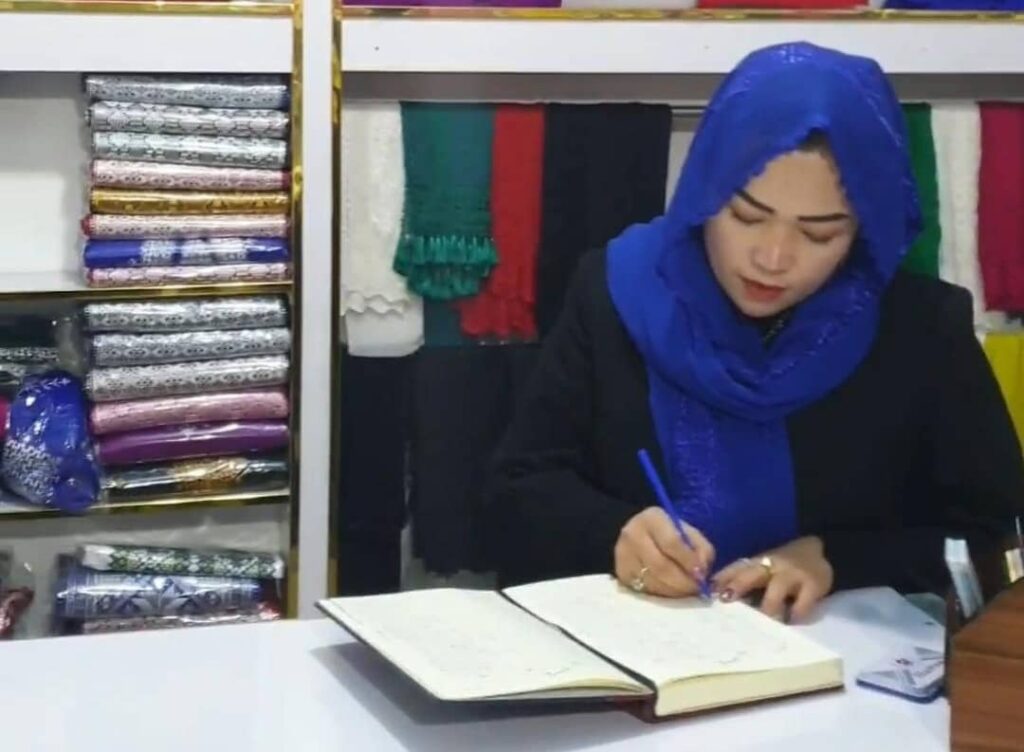
Fatima daughter, who was deprived of her long dreams due to the circumstances and is now a shopkeeper, says: “Taliban’s strict laws have caused not only emotional and psychological trauma but also economic trauma in my life.” Farkhunda Media: she is 23 years old and lives in a family of nine people in one of the districts of Kabul city. she is the sole breadwinner of her family. she struggles with many problems in order to save herself and her family from the chaotic economic situation. Fatima, who was in the sixth semester of international relations at Ibn Sina University, says: “When the Taliban took over Kabul, they deprived us of education and did not allow me to achieve the dreams and aspirations that I fought for several years, and I completely became a One of the victims of ignorance. According to her: After she was banned from continuing her studies, she was going through a very unfortunate situation and day by day the situation became more difficult and life became more difficult for her. Fatima continues: “My father is old and does not have the ability to work. On the one hand, the lack of destiny and the limitations of the Taliban, and on the other hand, the economic problems, were eating me up day by day, and I had no choice but to be patient. I was in a state of despair for almost two years and thought myself an extra being And I would sit for hours and think to myself and say that if I were a boy, maybe I wouldn’t have encountered this day.” When she realizes that she will no longer be able to achieve the dreams and aspirations that she has been fighting to achieve for several years, she follows another way to at least have one source of income and thus end her economic problems. But she knew that whatever path she chooses in the current situation will lead to difficulties. she, who had established a handicraft store a year ago, now has 300 housewives, student girls and school teachers directly and indirectly working with him. Fatima, who created this shop for her and her generation’s financial independence, said: “This job I chose has its own difficulties. Every day I start with the fear that Talib will say something or arrest me, but I have no choice, and if I don’t work, where will I pay for the household expenses?” She manages this shop while the restrictions on women’s work and life have reached their peak, but she does not submit to such patriarchal rules and fights for her future and her generations. According to her, most of their productions are Hazargi clothes, hand embroidery, chadors and shoes which are sewn by these 300 women. Complaining about the decrease in her sales, she said: “Before, our sales were good. People used to come and buy, but after the process of rounding up the girls started, our sales decreased, because most of the families did not leave the house for fear of being arrested. Gathering the girls was not only a mental blow for me, but also an economic blow for me. According to Fatima, while the conditions are becoming more difficult for women day by day, the busyness of women and girls who pay for their studies through hand embroidery is her only comfort in these days when despair and fear scream from every corner of this city. A situation has prevailed in Afghanistan where women are not even able to plan their personal life path due to the pressure of restrictions, but these restrictions did not prevent Fatima from achieving her wish and now she is trying harder than before to achieve her goals. she did not feel disappointed by the restrictions imposed by the Taliban and plans to attract more women to work and expand his production. Fatima, who emphasizes on individual financial independence, says: “Financial independence is more important in life, so we must try to expand individual financial independence, and every person can achieve financial self-sufficiency in order to lead their self to financial independence through society.” At the end of her speech, she asked other girls who were unable to continue working and studying: “The imposed restrictions aren’t the reason why we can’t stay at home and be sad, let’s make a way for ourselves. My expectation and wish is that every girl is a Find another way for yourself and don’t stop fighting and hopefully bravely walk on the path of life and there is always a way and you should not be disappointed. This is despite the fact that it has been more than two years that Afghan girls have been Prohibited from working and studying and the Taliban has imposed strict restrictions on them, and the recent restrictions of the Taliban on women have also followed caused serious domestic and foreign reactions. Atefa Suhrabi
A black night of history for “one life” in Taliban prison
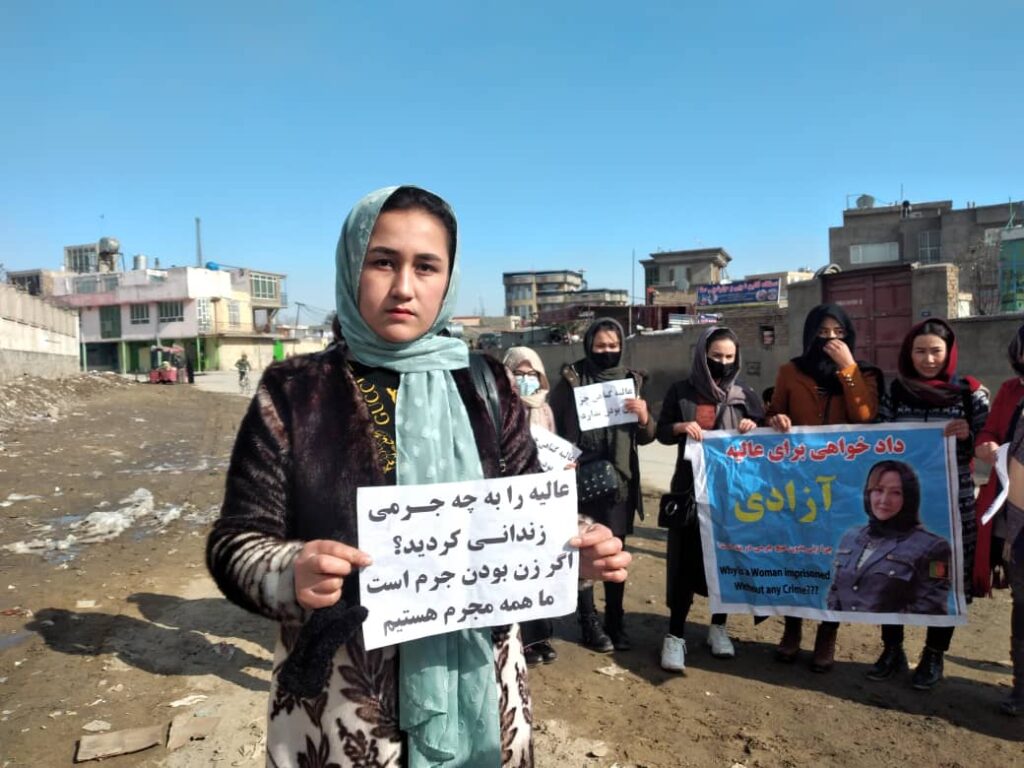
A bitter account of the story of the imprisonment of a young Afghan girl, who spent two days in a Taliban prison for the crime of seeking justice. Hakima Mahdavi is one of the members of the “Women’s Justice Movement” she was arrested from Tabsem cafe by help a person close to the Taliban, that sit to the cafe as spy, That person had found out by using a mobile phone that Hakima Mahdavi is a member of the movement for justice. Hakima narrates the story of her imprisonment as follows: “I made a date with my friend Sahar (pseudonym) at Tabsem Cafe, we were supposed to talk about a pre-planned program, we were talking, laughing and telling stories together. Unaware that a few minutes later they will take this smile from us forever. A few minutes had not passed when the door of the cafe was closed with a terrible sound and the whole place was occupied by people affiliated with the Taliban. color of my face flied, my hands were shaking and I was out of breath. As if there was no escape from this nightmare. I looked around, the men were standing in one corner and the women in the other. All those rascals who live under the name of man were whipped in turn for the crime of prostitution and adultery and stood in the other corner. I thought for a moment. If we all raise our voice against this oppression, we will never experience this humiliation, but what is unfortunate and tragic is that in this path of injustice, oppression, and betrayal, women are the only ones who raise their voices and demand justice. When it was my turn. He took my phone and told my mother with a short call that we will take your daughter to police station for prostitution and the call was disconnected. I wish no one would experience Taliban prison, a year passed for me in one night. they was treated me like an animal and gave me rotten food that I could not eat or drink. The Taliban beat my face and head, and gave electric shocks to parts of my body that I could not show to the media. they asked me many times, who do you work with? Who do you get money from? And why are you protesting? I was just telling the truth: “We are raising our voices for the defense of women’s rights, and we do not take money from anyone, and no one supports us.” But they repeated this question every time with successive blows. In exchange for my release, the Taliban demanded 10 lakh Afghanis from my family. When I heard this, I wished for death. Because I knew that no one would support us except my two brothers and my old mother. I wish I would die and not experience these hard days of my life and destruction. The next day, my brother was released me with 800,000 Afghanis, and because he hadn’t another 200,000, he was imprisoned for two months. This is not the end of the story! From that day on, the family looked down on me and our relatives did not allow me into their house, they were afraid that the Taliban would cause problems for them when they saw me. I spent the days in my friends’ rooms and houses. After all these hardships, my family and I immigrated to Iran. Currently, I am busy with the hard work of “tailoring” to pay the borrowed money that they paid in exchange for my release. I ask the international community to please help the women of Afghanistan. Especially the suffering and grieving women of the Hazara, whose fate is sadness, oppression and betrayal. We are also human beings, we have the right to live, we have the right to be present in the society as a human being. If the Taliban reads this story of mine, they should know that I will never surrender to their oppression, wherever I am in the world, I will raise my voice and support the rights of Afghan women and girls. This is despite the fact that protesting and imprisoned women have repeatedly reported the oppression and torture of the Taliban in prison. These narratives show the life of women in prison. History should know that brave Afghan women spent days and months in the harsh and painful prisons of the Taliban for the crime of seeking justice. kobra Alizada
Women victims of domestic violence in Afghanistan

Half of domestic violence victims are living with their attackers.
When the work of women in domestic and foreign institutions was stopped, we were miserable

45-year-old Gulsoum, who worked in a foreign company, says; With the prohibition of women’s work in foreign institutions and the closure of these institutions, families in Afghanistan are facing economic problems
many Afghan mothers, women and sisters have affected in Afghanistan by the recent wars, besides the loss of loved ones, economic problems and traditional restrictions are affecting these women.
Empowering Women in Sports: Breaking Barriers and Shattering Stereotypes

Women’s participation in sports has come a long way since the days when they were largely excluded from athletic competitions. Today, women in sports are not only proving their mettle but also breaking down barriers, challenging stereotypes, and inspiring generations to come. This article explores the evolving landscape of women in sports, their achievements, and the significance of their presence in this arena. The Evolution of Women in Sports Historically, women were discouraged from participating in sports, often considered too delicate or fragile to engage in physical activities. However, the late 19th and early 20th centuries marked a turning point when women began to demand their place in the world of sports. Pioneers like Billie Jean King, who defeated Bobby Riggs in the famous “Battle of the Sexes” tennis match in 1973, played a pivotal role in highlighting gender disparities in sports. Over the years, the fight for gender equality in sports has led to important milestones: Title IX: The passing of Title IX in the United States in 1972 was a game-changer. This federal law prohibited sex-based discrimination in educational programs, including sports. It opened doors for countless women and girls to access sports and athletic scholarships. Olympic Success: Women’s participation in the Olympic Games has grown significantly. In the 1900 Paris Olympics, women competed in just five events, while the 2021 Tokyo Olympics featured a nearly equal number of male and female athletes. Professional Leagues: The establishment and growth of women’s professional sports leagues, such as the WNBA (Women’s National Basketball Association) and the NWSL (National Women’s Soccer League), have provided female athletes with opportunities to pursue careers in sports. Breaking Stereotypes One of the most significant contributions of women in sports is their ability to challenge stereotypes and reshape society’s perceptions of female athletes. Here are some common myths that women in sports have shattered: Physical Ability: Women have demonstrated their physical prowess in various sports, proving that they are just as capable as men. Records in running, swimming, and weightlifting continue to be broken by female athletes. Strength and Power: Female athletes have shown that they possess immense strength and power, challenging the notion that physical strength is a male prerogative. Sports like CrossFit and powerlifting have strong female followings. Leadership: Many women in sports have taken on leadership roles as coaches, managers, and executives, debunking the idea that women cannot lead in traditionally male-dominated areas. Inspiring Future Generations The presence of women in sports has a profound impact on future generations. Young girls now have strong role models to look up to, motivating them to pursue their athletic dreams without limitations. The “see it, be it” principle is powerful, as it shows girls that they can achieve greatness in any field, including sports. Moreover, the benefits of sports participation extend beyond the playing field. Sports teach valuable life skills such as teamwork, discipline, resilience, and goal-setting, which empower women to excel in all aspects of life. Conclusion Women in sports have come a long way, and their journey is far from over. As they continue to excel, break records, and shatter stereotypes, they inspire us all to challenge preconceived notions and strive for gender equality in every sphere of life. It is crucial to support and celebrate the achievements of women in sports, not only for the athletes themselves but also for the generations of women and girls who will follow in their footsteps. Through their dedication and determination, women in sports are forging a brighter, more inclusive future for all.