
“Two Tragic Murders in Herat: Women Left Defenseless Against Domestic Violence”
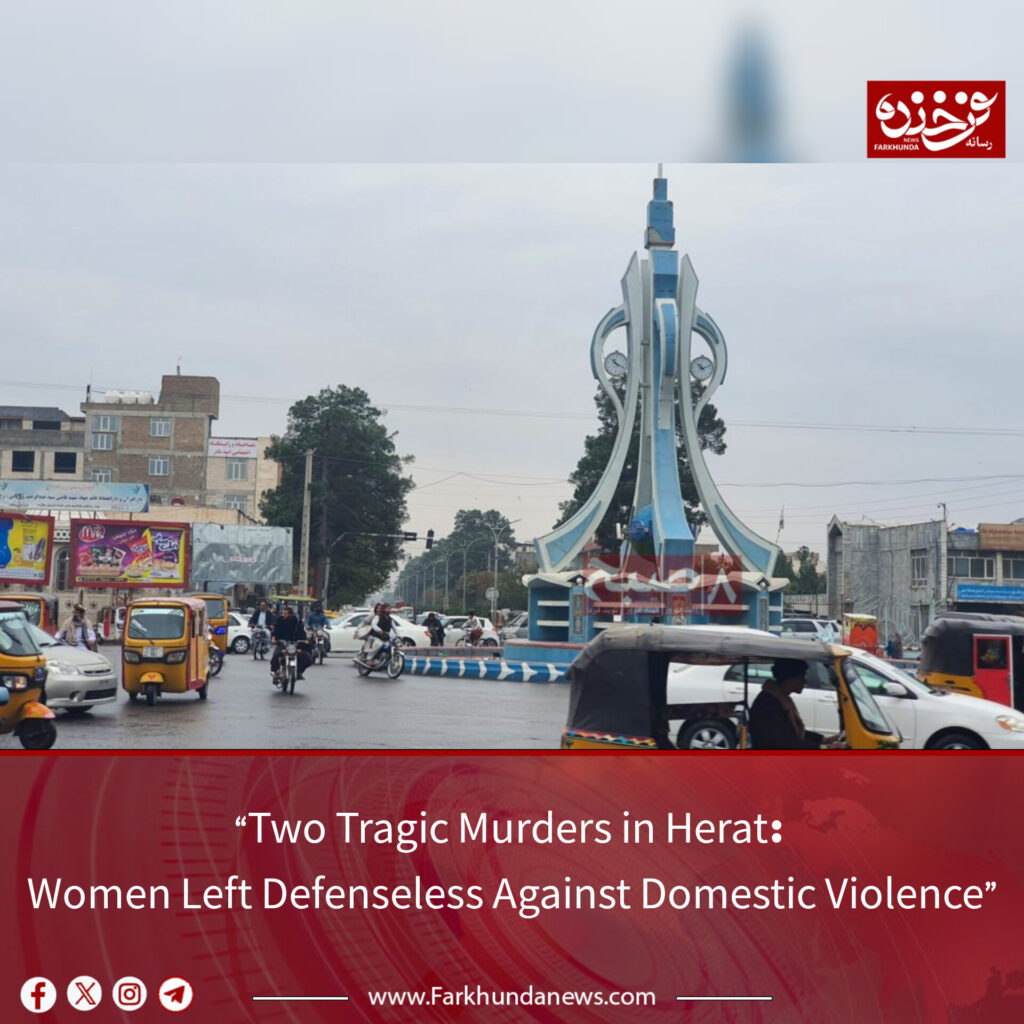
Farkhunda News; Herat, Afghanistan: Under the shadow of Taliban rule and intensifying restrictions on women, another horrific act of domestic violence has shaken the country. Local sources in Herat report that a man brutally beheaded his wife last night in Adraskan district, before stabbing and killing both of his parents. The tragedy unfolded in the village of Gol-e-Tut. While the motive behind the attack remains unclear, many women’s rights advocates see it as a direct outcome of the Taliban’s repressive environment. In this environment, women are denied protection, stripped of rights, and systematically silenced. Herat’s Taliban-controlled police command confirmed the incident but has not released any information on the investigation or underlying cause. This marks the second woman killed by her husband in Herat within just 24 hours. On the previous day, another young woman was murdered by her spouse in the heart of the city. Since the Taliban’s return to power, violence against women has surged across the country. The removal of women from education, employment, and public life, combined with the absence of judicial independence and support institutions, has left Afghan women in an increasingly perilous state. According to women’s rights activists, the cases that reach the media are just the tip of the iceberg. Hundreds more suffer in silence, hidden behind closed doors, with no access to justice or even a voice. At a time when Afghan women are facing historic levels of oppression, these tragedies are not isolated incidents. They are symptoms of a systemic crisis, one that thrives on silence, impunity, and the erasure of half the population.
Women victims of domestic violence in Afghanistan

Half of domestic violence victims are living with their attackers.
When the work of women in domestic and foreign institutions was stopped, we were miserable

45-year-old Gulsoum, who worked in a foreign company, says; With the prohibition of women’s work in foreign institutions and the closure of these institutions, families in Afghanistan are facing economic problems
many Afghan mothers, women and sisters have affected in Afghanistan by the recent wars, besides the loss of loved ones, economic problems and traditional restrictions are affecting these women.
Analytical Approach to the Internal Situation in Afghanistan

Understanding the internal situation in Afghanistan requires a multifaceted analytical approach that considers historical context, socio-cultural dynamics, political developments, security challenges, economic conditions, and the aspirations of its diverse population. This analytical framework seeks to provide a comprehensive view of Afghanistan’s internal dynamics. 1. Historical Context: Analyzing the historical context is essential to grasp Afghanistan’s internal dynamics. This includes an examination of past governments, periods of stability, conflicts, and foreign interventions. Historical legacies continue to influence contemporary events. 2. Socio-Cultural Dynamics: Understanding Afghanistan’s diverse ethnic and tribal composition, as well as its social norms and values, is crucial. Analyzing how these factors shape the roles and expectations of individuals and groups within society helps elucidate internal dynamics. 3. Political Landscape: Examining the political landscape involves assessing the power structures, governance models, and key actors in Afghanistan. This includes understanding the role of political parties, factions, and the extent of political inclusivity or exclusion. 4. Security Challenges: Assessing the security situation is fundamental to understanding internal dynamics. This involves analyzing the activities of insurgent groups, the state’s capacity to maintain security, and the impact of external actors on security. 5. Economic Conditions: Economic factors, including poverty levels, employment opportunities, access to basic services, and income disparities, play a significant role in shaping internal dynamics. Evaluating the economic challenges faced by Afghans helps explain their motivations and grievances. 6. Local and Regional Dynamics: Internal dynamics are often influenced by regional and local factors. Analyzing the relationships between Afghanistan and neighboring countries, as well as the role of regional powers, is critical to understanding the broader context. 7. Civil Society and Public Opinion: The role of civil society organizations, the media, and public opinion in shaping internal dynamics should not be overlooked. Their activities, advocacy, and influence on government policies are key elements of the internal landscape. 8. Aspirations and Identity: Understanding the aspirations and identity of Afghans, including their desire for peace, justice, human rights, and self-determination, is crucial. Analyzing how these factors interact with broader socio-political dynamics helps to anticipate future trends. 9. Vulnerable Populations: Assessing the vulnerabilities of specific groups, such as women, children, minorities, and internally displaced persons, is essential. These populations often face unique challenges that impact the internal situation. 10. Environmental Factors: Environmental issues, such as water scarcity and climate change, can exacerbate internal challenges, including resource conflicts and displacement. Examining the environmental dimension is increasingly important. 11. Conflict Resolution and Peacebuilding: Analyzing ongoing efforts for conflict resolution and peacebuilding is vital for understanding the trajectory of internal dynamics. This includes examining negotiations, reconciliation processes, and the role of international mediators. 12. Future Scenarios: Finally, an analytical approach should consider potential future scenarios based on current trends, external influences, and internal dynamics. Scenario planning can help anticipate challenges and opportunities. In conclusion, comprehending the internal situation in Afghanistan requires a holistic analytical approach that considers a multitude of factors and their interactions. This multifaceted perspective is crucial for policymakers, researchers, and practitioners seeking to engage with Afghanistan and contribute to its stability, development, and peace.
The Taliban: A Complex Portrait

Introduction: The Taliban, a militant group originating in Afghanistan, has garnered global attention for decades due to its complex history, actions, and impact on the region. This report offers an overview of the Taliban, tracing its origins, evolution, objectives, and the challenges it presents to both Afghanistan and the international community. I. Historical Background: The Taliban emerged in the early 1990s in the aftermath of the Afghan Civil War and the Soviet withdrawal. They sought to establish a strict interpretation of Islamic law and brought a semblance of stability to a war-torn country. II. Rule in Afghanistan (1996-2001): The Taliban captured Kabul in 1996 and controlled most of Afghanistan. During their rule, they enforced a harsh interpretation of Sharia law, which severely curtailed women’s rights, led to the destruction of cultural heritage, and harbored international terrorists, notably Osama bin Laden. III. U.S. Intervention and Taliban Resurgence: Following the 9/11 attacks, the U.S.-led coalition toppled the Taliban regime in 2001. However, the Taliban persisted as an insurgent force, launching a protracted insurgency. IV. Evolution and Objectives: Shifting Ideology: The Taliban has evolved in its approach, expressing some willingness to negotiate and share power. Objectives: The group’s primary objectives include the reestablishment of an Islamic Emirate, withdrawal of foreign troops, and the implementation of their version of Islamic law. V. The Doha Agreement and the Return to Power (2021): In August 2021, the Taliban captured Kabul, marking a significant shift in Afghanistan’s political landscape. This takeover came after the U.S.-Taliban Doha Agreement, which committed the U.S. to withdraw troops. VI. Challenges and Concerns: Human Rights: The Taliban’s track record on human rights, particularly women’s rights and freedom of expression, raises significant concerns. International Relations: The Taliban’s return has sparked debates over international recognition, diplomacy, and engagement. Security Threats: Afghanistan’s instability and potential for harboring extremist groups pose security risks globally. VII. Current Situation: The Taliban has established an interim government and faces challenges in governance, humanitarian crises, and economic instability. VIII. International Response: The international community is navigating a complex landscape in its engagement with the Taliban, focusing on humanitarian aid, conditional recognition, and counterterrorism efforts. Conclusion: The Taliban’s history and resurgence have far-reaching implications for Afghanistan and the world. Its capacity for change and willingness to uphold human rights and engage with the international community will shape its future trajectory. Balancing security concerns with humanitarian needs remains a pressing challenge, and continued global attention is essential to navigating this complex terrain and addressing the evolving dynamics surrounding the Taliban.
Inside Afghanistan: A Glimpse into the Nation’s Current Affairs

Introduction: In this edition of Inside Afghanistan, we bring you a closer look at the evolving internal dynamics and happenings within the nation. While international headlines have focused on Afghanistan’s geopolitical situation, it’s equally crucial to shed light on the internal news that shapes the lives of its people. Education Initiatives Blossoming: Afghanistan’s education system continues to make strides, despite the challenges. Schools across the nation have been reopening, and more girls are returning to classrooms. Organizations like Educate Afghanistan have played a pivotal role in promoting equitable access to education, emphasizing the importance of knowledge as a tool for empowerment. Cultural Resilience: Afghanistan’s rich cultural heritage remains a source of strength. Afghan musicians, artists, and storytellers are working tirelessly to preserve and promote their cultural traditions. In Kabul, art exhibitions and musical performances are becoming more commonplace, serving as reminders of the nation’s enduring spirit. Women’s Empowerment: Afghan women continue to defy stereotypes and barriers, pursuing diverse career paths and leadership roles. Women entrepreneurs, doctors, engineers, and politicians are making significant contributions to society, illustrating the importance of gender equity in the nation’s progress. Youth Engagement: Afghanistan’s youth are actively participating in shaping the nation’s future. Youth-led initiatives are addressing pressing issues such as climate change, unemployment, and civic engagement. Organizations like Afghan Youth Voices are providing platforms for young voices to be heard and acted upon. Humanitarian Efforts: Amidst challenges, humanitarian organizations are working tirelessly to provide aid to vulnerable populations. With a focus on food security, healthcare, and shelter, these efforts are vital in alleviating suffering in conflict-affected regions. Sports and Recreation: Afghanistan’s love for sports remains unbroken. Football, cricket, and martial arts are popular pastimes, and the nation continues to produce talented athletes who represent Afghanistan on the international stage. Challenges Persist: It’s essential to acknowledge that Afghanistan faces numerous challenges, including security concerns, economic hardships, and political uncertainties. However, the resilience and determination of its people are constant sources of inspiration. Conclusion: Internal news from Afghanistan provides a glimpse into the hopes, aspirations, and challenges faced by its people. While the nation navigates a complex geopolitical landscape, it’s the spirit and strength of its citizens that continue to shape its future. Stay tuned for more updates on Inside Afghanistan, where we delve deeper into the heart of this resilient nation.
Empowering Women in Sports: Breaking Barriers and Shattering Stereotypes

Women’s participation in sports has come a long way since the days when they were largely excluded from athletic competitions. Today, women in sports are not only proving their mettle but also breaking down barriers, challenging stereotypes, and inspiring generations to come. This article explores the evolving landscape of women in sports, their achievements, and the significance of their presence in this arena. The Evolution of Women in Sports Historically, women were discouraged from participating in sports, often considered too delicate or fragile to engage in physical activities. However, the late 19th and early 20th centuries marked a turning point when women began to demand their place in the world of sports. Pioneers like Billie Jean King, who defeated Bobby Riggs in the famous “Battle of the Sexes” tennis match in 1973, played a pivotal role in highlighting gender disparities in sports. Over the years, the fight for gender equality in sports has led to important milestones: Title IX: The passing of Title IX in the United States in 1972 was a game-changer. This federal law prohibited sex-based discrimination in educational programs, including sports. It opened doors for countless women and girls to access sports and athletic scholarships. Olympic Success: Women’s participation in the Olympic Games has grown significantly. In the 1900 Paris Olympics, women competed in just five events, while the 2021 Tokyo Olympics featured a nearly equal number of male and female athletes. Professional Leagues: The establishment and growth of women’s professional sports leagues, such as the WNBA (Women’s National Basketball Association) and the NWSL (National Women’s Soccer League), have provided female athletes with opportunities to pursue careers in sports. Breaking Stereotypes One of the most significant contributions of women in sports is their ability to challenge stereotypes and reshape society’s perceptions of female athletes. Here are some common myths that women in sports have shattered: Physical Ability: Women have demonstrated their physical prowess in various sports, proving that they are just as capable as men. Records in running, swimming, and weightlifting continue to be broken by female athletes. Strength and Power: Female athletes have shown that they possess immense strength and power, challenging the notion that physical strength is a male prerogative. Sports like CrossFit and powerlifting have strong female followings. Leadership: Many women in sports have taken on leadership roles as coaches, managers, and executives, debunking the idea that women cannot lead in traditionally male-dominated areas. Inspiring Future Generations The presence of women in sports has a profound impact on future generations. Young girls now have strong role models to look up to, motivating them to pursue their athletic dreams without limitations. The “see it, be it” principle is powerful, as it shows girls that they can achieve greatness in any field, including sports. Moreover, the benefits of sports participation extend beyond the playing field. Sports teach valuable life skills such as teamwork, discipline, resilience, and goal-setting, which empower women to excel in all aspects of life. Conclusion Women in sports have come a long way, and their journey is far from over. As they continue to excel, break records, and shatter stereotypes, they inspire us all to challenge preconceived notions and strive for gender equality in every sphere of life. It is crucial to support and celebrate the achievements of women in sports, not only for the athletes themselves but also for the generations of women and girls who will follow in their footsteps. Through their dedication and determination, women in sports are forging a brighter, more inclusive future for all.